

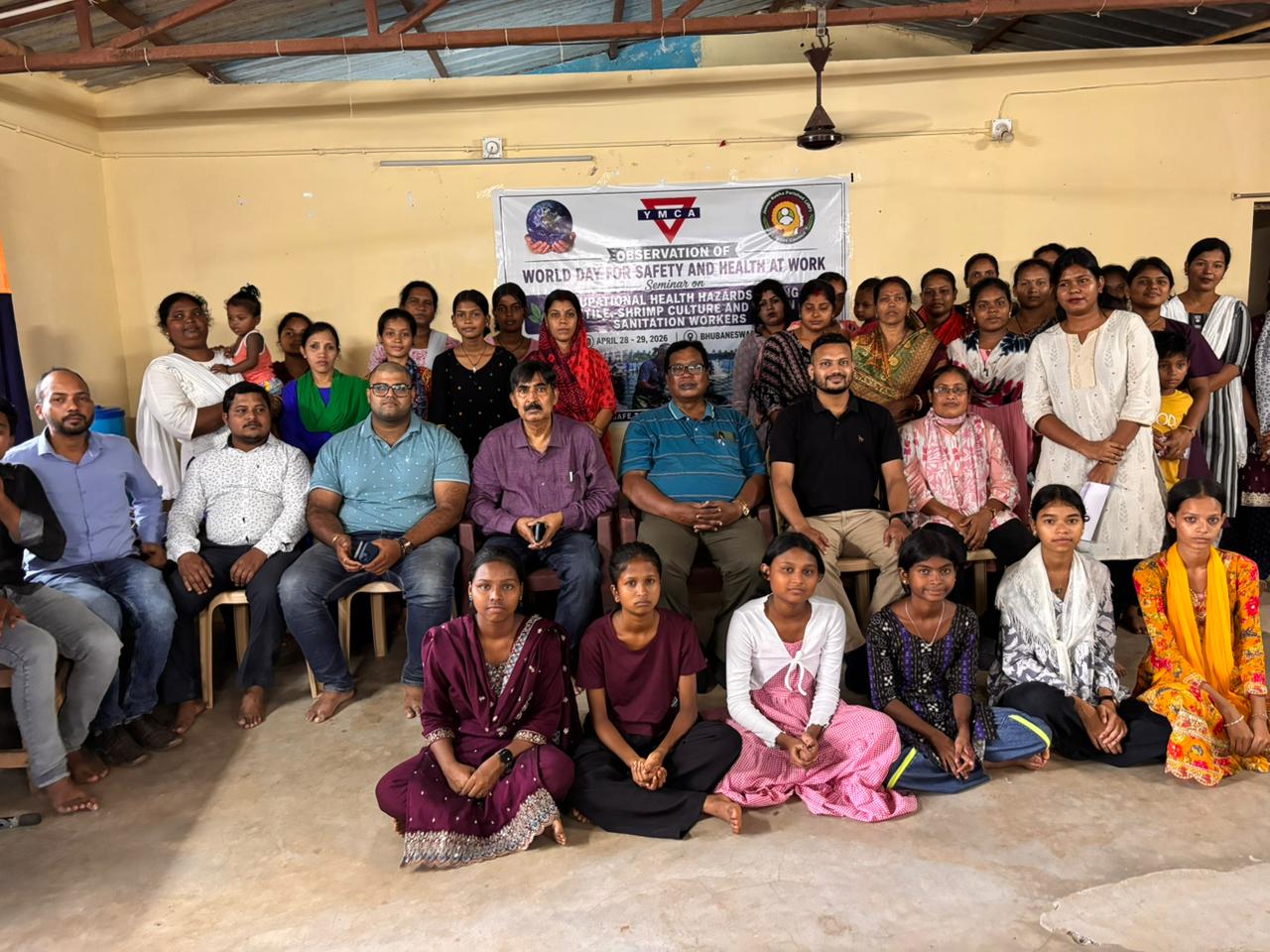
Group Picture. Source: Jeevan Rekha Parishad
On May 1st, 2026, Jeevan Rekha Parishad (JRP) organized an awareness program on the topic of Occupational Health Hazard on the occasion of the World Day for Safety and Health at Work, in collaboration with the Young Men’s Christian Association (YMCA), Bhubaneswar. More than 80 working women from the domestic, nursing, and textile industry participated enthusiastically in this interactive event.
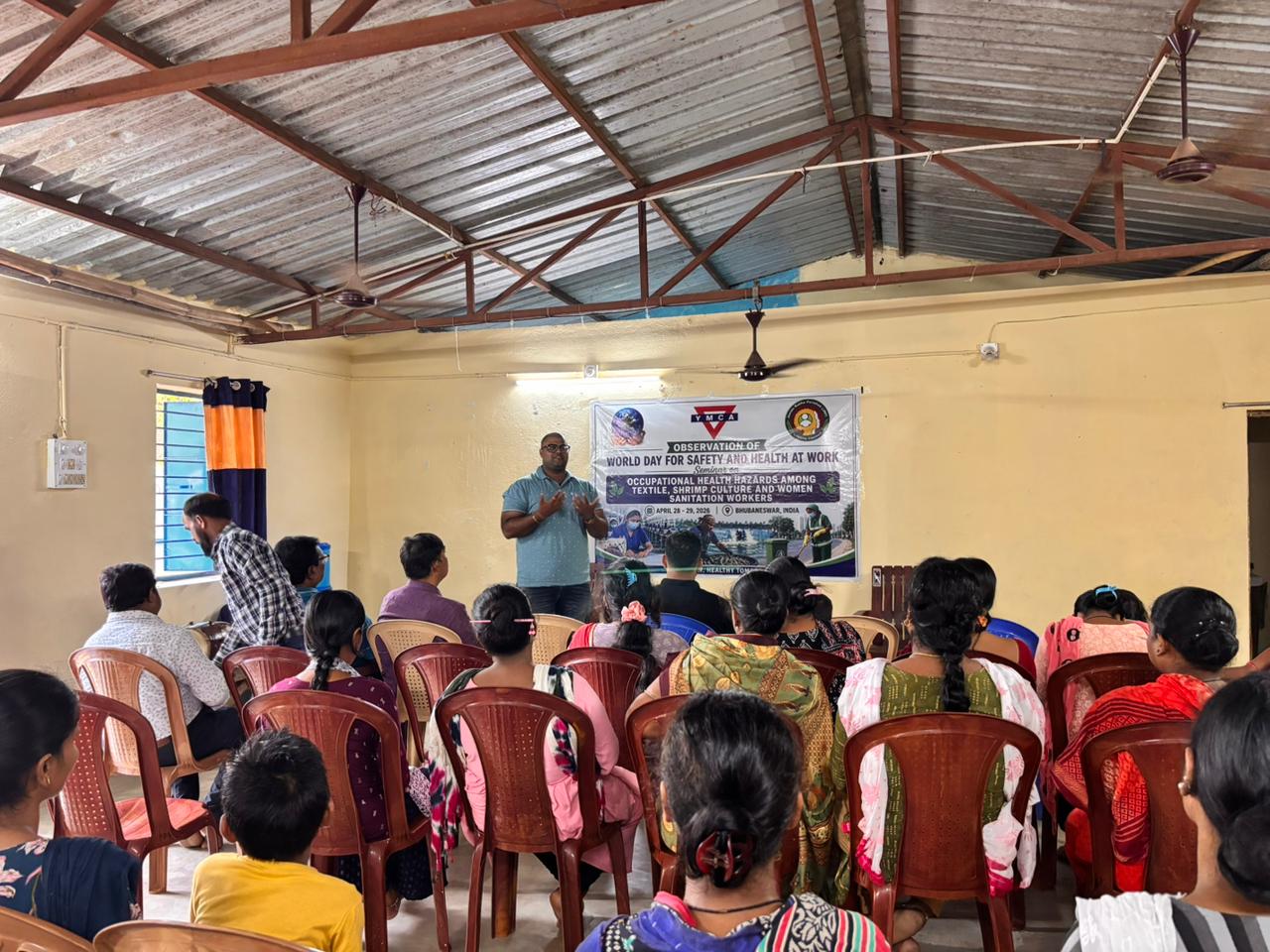
Deepak Barik opening interaction
Health Expert and Project Director JRP, Mr. Deepak Barik (MSc Public Health), opened the session, highlighting details of the health threats posed by different occupations. He interacted with the workers to learn more about their challenges. Some of the most common challenges faced were back and neck pain due to prolonged sitting, which mainly came from workers in the Textile industry. Some of the workers also reported their knee and joint pain; this was particularly reported by those above 40 years, signalling the insufficient intake of calcium in their nutrition.
Dr. Manoranjan Mishra, Director, Jeevan Rekha Parishad
Dr. Manoranjan Mishra, Director, Jeevan Rekha Parishad, spoke on best practices workers can adopt and employ for overall safety andwell-being at their workplaces. He stressed simple and useful techniques of protection, including wearing a facemask, headgear, and gloves to avoid bacterial, viral, or any such transmissible infection.
Saurabh, a Peace Fellow at the Advocacy Project, emphasized the economic and developmental loss as a threat from the health emergency. He added the loss of potential of the entire family that could push the family back for several days or weeks just because of the illness of one earning member of the family. This compounding household vulnerability is heavily mirrored when illness strikes the women of a family; empirical research by Onarheim et al. (2016) demonstrates that women face distinct biological and social health risks that lead to severe productivity loss and years lived with disability, directly stripping families of both income-generating potential and vital routine household labor.
Saurabh Bhoyar, Peace Fellow, the Advocacy Project
Furthermore, macroeconomic analyses by Bloom et al. (2020) confirm that even minor disruptions to female health cause significant productivity losses due to heightened morbidity during working lives, increasing the opportunity costs of household management and severely delaying long-run family and economic development.
The women workers clarified their queries at the end of the program, committed to better health practices, and shared their gratitude for the opportunity they had for learning that could improve their overall well-being and contribute to upgrading a better quality of life. This direct engagement underscores the critical need for sustained occupational health education within marginalized labor sectors. By equipping these workers with actionable knowledge and protective measures, the initiative builds a foundation for long-term community resilience and reduced economic vulnerability. Ultimately, fostering such grassroots awareness ensures that workplace safety becomes an integral part of sustainable social and economic development.
Posted By Saurabh Bhoyar
Posted May 21st, 2026