A Voice For the Voiceless

MISSION

The Advocacy Project seeks to help community-based advocates produce, disseminate and use information, and so become more effective advocates for human rights and social justice

TAKE ACTION FOR ADVOCACY

  • News
  • FAQ
  • Subscribe to our newsletter
  • Search

The Advocacy Project Blogs

 
09/01/08

Looking Back

Posted By: Janet

I knew 3 months in the Balkans would not provide me with instant clarity and understanding of a region that is frequently baffling to even those who have lived there their whole lives. However, it did help me understand the context and origins of many of the problems that the people of the Former Yugoslavia deal with every day. It helped me see why some of issues that many of us don't "get" in the U.S. are so important.

One of the best reasons to travel is to gain perspective on where you come from. Three themes kept emerging in my thoughts during my trip:

1) Many of the goals Women in Black are struggling for seem, to me, "obviously good": ethnic and religious tolerance, nonviolence, gender equality, and separation of church and state. But many people in Serbia consider WiB as radicals with harmful views. What voices in my life have I dismissed as too extreme?

2) Women in Black and other activists like them have only achieved progress by putting themselves in uncomfortable situations: they had to ask for more than others thought reasonable. It made me think about social changes in the United States that I believe are within reach, but I have been not active in working for. I resolve to do more than just wait for them to happen.

3) Finally, I appreciated the rights and freedoms I have been able to enjoy in my life more and more. Looking back toward my home, both its flaws and virtues became more salient: I felt grateful that I did not have to worry about people knowing my last name. As someone who in other times and places could have been persecuted for a number of my inherent characteristics, I realized what a privilege it is to be able to forget about those things. However, that makes the presence of things like racism and homophobia in present-day America all the more ludicrous and abhorrent to me. The more I thought about how much progress we have made, the more incensed I was that we still allowed these types of injustices to persist.

None of these ideas or thoughts are novel or unique; I had read about and discussed many of them before. But having these realizations and emotions stem from actual events and relationships made them far more meaningful to me.

08/05/08

Confronting the Past Part II: Prijedor

Posted By: Janet

One of Women in Black's main philosophies and practices is "Confronting the Past - A Feminist Approach." I got another first-hand lesson about what this means a few weeks ago.

A day after the world learned that Radovan Karadzic had been apprehended, I got on a bus with the Women in Black to go to Prijedor, a region in the northwestern part of Bosnia, in Republika Srpska. We were going to a memorial service for the victims of an "unrecognized genocide." During the war, Bosnian Serb forces created three concentration camps in the region of Prijedor: Omarksa, Trnopolje, and Keraterm. Thousands of Bosnian Muslims and Bosnian Croats were imprisoned, tortured, raped, and killed in these camps. There are many places like Prijedor, that don't have the infamous ring of "Srebrenica," but that were scenes of war crimes all the same.

Appropriately miserable weather accompanied this commemoration, just as it did at Srebrenica - although this time it was not hot, but raining and surprisingly cold for July.

While we were there, we stayed with a Bosnian Women's association. They had first come together as a mutual assistance organization when they were living as refugees in Croatia. When the women returned home, they continued their service to the community. After the memorial service, when we returned soaking wet, our hosts gave us warm, dry sweaters and stockings to change into. As we drank some of the most delicious Turkish-style coffee I've ever had, the women talked. As usual, I understood only a tiny percentage of what was being said; but I could tell that the Bosnian women were talking, and the Serbian women were listening. As our hosts' eyes filled with tears, I knew that they were talking about their lost friends and relatives, whose pictures adorned the walls of the dining room across the hall. I was witnessing the feminist approach to confronting the past in action.

To me this is the most important aspect of Women in Black's activism. They condemn all war crimes committed by everyone. And they do it not only through political actions and publications, but also on a personal, relational level. It is no longer a division between nations or ethnicities, but a division between people who desire peace, and those who have sought to destroy it. A division between civilians, women, children, elderly people-- and those who persecuted them. I see this as a much more reasonable way of categorizing people. This is not the sort of relativization that leads to saying "Well, all sides committed atrocities, so what can be done about it?" And it is equally not the sort of logic of victimization that ascribes all the guilt to the others. A civilian is a civilian, not a Serb, Croat, or Bosniak. People are made innocent or guilty by their actions, not their ethnicity. Embodying this and living it on a personal level, as the Women in Black and their partners in the Balkans do, is one of the hardest and also one of the most critical steps toward reconciliation and peace.

08/04/08

Operation Storm

Posted By: Janet

Today is the anniversary of Operation Storm (Operation Oluja in Serbo-Croatian), a Croatian offensive in 1995 in which Serbian civilians were killed and forced from their homes. It is another one of the events of the Bosnian War that used to be a comfortably fuzzy sketch in my mind... It feels so wrong that there are so many things that were completely life-altering to my friends here, that I used to know nothing about...

Below are links to two articles about Operation Oluja and its aftermath:

13th Anniversary of Operation Storm - from B-92

From Balkan Insight.com

Ante Gotovina, commander of Croatian forces during Oluja has been indicted by the International Criminal Tribunal for the Former Yugoslavia (ICTY) for crimes against humanity committed during the campaign.

07/27/08

Karadzic

Posted By: Janet

Radovan Karadzic’s face is everywhere. The photos are no longer the mug shots of a wanted man, but a strange collection of images showing the transformation from his old to his new persona – from confident commander to gentle (appearing) guru. And the reactions to his arrest are just as diverse – many of you will have read about the pro-Karadzic rallies that have been going on here in Belgrade. The protests were held in the center of the city, in Republic Square, which is where Women in Black also hold their street actions – however these were no silent vigils. The raucous crowd spilled out into the surrounding streets, and a B-92 cameraman was assaulted two blocks away from my apartment, on one of the routes I take to work.

For the first few turbulent days after the arrest, I was traveling with Women in Black in northwestern Bosnia (more on that in the next post); when I came back to Belgrade, it felt like the city had changed. Standing with colleagues, looking at television footage of the marching crowd, the familiar scenery of Belgrade's city center appeared transformed. I realized that, as with a person, there are sides of a city that you don't get to see until you are around them for a while.

I feel I must also include a link to this opinion piece in the Moscow News (an English-language weekly in Russia), because it explains the perspective of many of those protesting the arrest of Karadzic as unfair. It would be hypocritical to ignore it. You can then read Women in Black's position on the arrest in this Advocacy Project News Bulletin about the reaction of Balkan peace activists to the Karadzic's arrest. Although the majority of public opinion probably lies somewhere in between these two examples, it really illustrates how radical Women in Black are; it is easy for the New York Times or the BBC to hail Karadzic's arrest as long-awaited justice, but here in Serbia, that point of view is far from popular.

Finally, I want to add that people in cafés and markets have been as gracious as ever to me, even when I reply “iz Amerike” to their question about where I come from.

07/21/08

Srebrenica

Posted By: Janet

I am posting this just hours after Radovan Karadzic, one of the two men accused by the Hague for organizing the genocide at Srebrenica, was arrested after more than 10 years on the run. This is an important step toward justice and reconciliation in the Balkans, and I will write more about it in my next entry.

Friday, July 11th was the day I had been anticipating and dreading since I found out I would be spending this summer in the Balkans: the anniversary of the genocide at Srebrenica thirteen years ago. I knew how important it would be to see the memorial service, and how much it would mean to be with the Women in Black there. But I also knew that this was an experience nothing in my life had prepared me for: as multiple survivors of war and trauma have told me, it is a blessing not to be able to truly comprehend what they went through. Yet this is why I came here: to better my understanding of the types of conflicts which give rise the most awful terms in our modern lexicon of violence: crimes against humanity, refugees and internally displaced persons, ethnic cleansing.

Although I had researched the Srebrenica Genocide before, my true mental introduction to July 11th began last month when I visited the Women of Srebrenica Citizen’s Association in Tuzla. After joining them in their monthly march demanding justice for those killed in the massacre, members of Women in Black and I went back with them to their office for coffee and conversation. I came into the room, took in the scene of friendly faces, cigarette smoke and coffee, and then froze: the walls were covered with the pictures of their missing men. Hundreds and hundreds of faces, stern, playful, young, old – these women were surrounded daily by these images of their lost husbands, sons, brothers, fathers. The feeling of that moment, the juxtaposition of warmth of the people I meet here and the cold, unimaginable events of the past, has stayed with me and was especially present when I returned to Bosnia this month. After the commemoration in Srebrenica, I also visited Sarajevo and Mostar, two other places that have become emblematic of the horrors of the Bosnian War.

Again and again during my time in Bosnia I was confronted with a thought so commonplace that it sounds trite: how could this happen in such a beautiful place? As dreadful as it may be to say, there are places where it is easier to imagine horrible things happening: blasted desert landscapes ravaged by draught, poverty-stricken small towns with boarded-up windows, garbage-strewn streets of crowded slums …however the hills of Bosnia seem not only lovely but peaceful. Though evidence to the contrary was all around me, I could not escape this misplaced feeling of serenity: I felt it when I looked at the rose garden of the Women of Srebrenica Citizen’s Association, when I saw the striking skyline of Sarajevo at sunset, when I admired the lush green hills around Srebrenica…but when I saw the 300+ green coffins, smaller than normal because there are usually no more than a few bones left to be buried, when I saw a video at the memorial center (located in the former barracks of the UN Soldiers who were charged with enforcing the “Safe Area” of Srebrenica) of bedraggled prisoners being tormented by Bosnian Serb troops, I knew that hills all around me had been turned into hell that day.

As I stood silently at the commemoration, during the speeches, during the prayers, I imagined what it would have been like to be those men and boys thirteen years ago. It was 90+ degrees in the midday sun, and I was hot and thirsty and exhausted: but I had a water bottle, I could take breaks and sit down, and I knew that that night I would be in a safe, cool bed. The men who tried to escape the massacre by through the forest were running with no shoes, no food, - how hot, how hungry, how ill, exhausted and terrified did they feel? And for most of them, the ordeal ended with a bullet in the head, if they were lucky, worse if they weren’t. There is no way to understand this.

As I was trying to reconcile images in my mind, small things brought me back to the present: everyone was sweating and getting sunburned in the heat, and shade was a scarce commodity. The Women in Black were indeed wearing black, despite the weather, to symbolize mourning. At one point, as we were entering the second hour of standing in a line holding our banner, one of the women from Srebrenica came by and cooled us off with a wet cloth. This simple, wordless gesture of basic compassion by a stranger reassured me. It may not be possible to understand why or how some people are able to commit these kinds of crimes; it may be, on the other hand, painfully understandable why others allow it to happen. But these evils do not erase a world where kindness exists: they do not change the order of the universe and take away the familiar beauty of the hills or a garden or a stranger’s hospitality. I cannot escape the fact that Srebrenica happened, and that atrocities are still happening in the world today; but I remain thankful for the people I have met here, Serb, Bosnian, Croatian, Albanian and everything in between, and for the work they are doing. They are evidence of the good that has continued on past that day thirteen years ago, past many other days of war and suffering –in the face of one of the world’s greatest attempts to destroy and debase humanity, they are evidence of the good that survived.

07/08/08

Mobilize! Organize! Resist!

Posted By: Janet

On June 6th, Women in Black – Belgrade held an interactive street performance protesting gun violence as part of the Global Week of Action Against Gun Violence. The theme of the action was "Mobilize! Organize! Resist!" Many Advocacy Project Partner organizations also participated in this annual week of action, which is spearheaded by the International Action Network on Small Arms (IANSA).

Although it is now almost a month after the event, I still wanted to share some media of the performance, in order to further illustrate the different ways WiB approach activism and public dialogue.

"Mobilize! Organize! Resist!" included Women in Black's traditional silent protest,

Women in Black Serbia Protest Gun Violence


but also added a multimedia component. Women in Black members Jelena Chelebic and Katie Mahuron created a video which alternated facts about guns and violence in Serbia with photos of Women in Black activities. The English translation of the text in the slides is included below the video

1. Global Week of Action Against Gun Violence
Women in Black
2. Mobilize! Organize! Resist!
3. There are more than 875 million guns in circulation worldwide.
4. Another 8 million guns are manufactured throughout the world each year
5. One thousand people each day are killed through gun violence.
6. Deaths during war or armed conflict account for 250 of the 1000 deaths each day.
7. “In many countries that have suffered violent conflict, the rates of interpersonal violence remain high even after the cessation of hostilities – among other reasons because of the way violence has become more socially acceptable and availability of weapons.” The World Health Organization, World Report on Health and Safety
8.There are 1,056,314 registered civilian guns in Serbia.
9. The average number of weapons owned by a household in Serbia is 1.5
10. Guns can easily be bought on the black market in Serbia. The Jug TT can be purchased on the black market for 125 Euros, which is close to half of the average Serbian household’s monthly income.
11. There are an estimated 944,000 unregistered/illegal civilian firearms in Serbia.
12. The estimated average number of firearms in Serbia is greater than the number of phone lines in Serbia.
13. In December 2007, the Serbian military company Jugoimport-SDPR signed a 235 million dollar deal with the government of Iraq for military equipment and weapons.
14. In 2006, Serbian companies sold 9 million dollars of military equipment to the Burmese junta who is known for its extreme human rights violations.
15. We call for Serbian military industry companies to cease exporting weapons, particularly to Iraq.
16. We call for the Serbian government to enact United Nations Security Council Resolution 1325 in order to increase the role of women in all decision-making processes at all levels.
17. We demand a cessation to all forms of violence, especially violence against women.
18. We demand that Serbia stop exporting military equipment around the world.
19. Mobilize! Organize! Resist!

We also showed a video created by IANSA, called "Kill the Gun," which uses one simple visual idea that still leaves a striking impression.

To see more photos from the action, visit my Flickr page

It was a good warm-up for a much larger and more controversial event happening this week: in the same place, the main public square in Belgrade, Women in Black Serbia will present a film featuring widows of the Srebrenica massacre giving their testimonies, as well as their messages to the citizens of Serbia.

06/20/08

Confronting the Past: The Special Court for War Crimes in Belgrade

Posted By: Janet

One of Women in Black - Serbia's main activities related to transitional justice is monitoring the trials of those accused of war crimes during the Bosnian War and in Kosovo. While many know of the International Criminal Tribunal for the Former Yugoslavia (ICTY) at the Hague, there is also a Special Court for War Crimes in Belgrade. The ICTY handles the cases of the major players such as Slobodan Milosevic (who died in custody), and Vojislav Seselj (who also happens to be the head of the Serbian Radical Party). The Special Court in Belgrade tries lower-level army and police officials, who are nevertheless accused of serious war crimes. One infamous case is the trial of 5 members of the Scorpions, a Serbian paramilitary group, who were captured on video murdering 6 Bosnian men in Srebrenica.

The trial I observed was for crimes committed at Suva Reka, a town in Kosovo, on March 26th, 1999, at the onset of the NATO bombing campaign. Eight members of the Serbian special police are accused of massacring 48 people at a pizzeria, all but one of them from the Berisha family. The victims ranged from children, to a pregnant woman, to an elderly person of 100 years. I visited the court with several members of Women in Black, including activists who have been monitoring this trial since it began in 2006.

We were there for over three hours, and my colleagues did an excellent job of translating, but I was obviously not able to absorb everything. Therefore I am going to keep my commentary and analysis very basic, because I want to be careful when discussing such a simultaneously important and convoluted subject. I hope that anyone reading this who has anything they can share on the subjects of war crimes trials, transitional justice, or even courtroom procedures would comment on this post and provide additional information or resources.

The first thing that struck me was the physical set-up of the courtroom. I freely admit that my exposure to courtrooms in the United States has been confined to the cinematic variety, so my ability to make comparisons is limited, to say the least. The accused, the witnesses, the lawyers and the judges were all separated from the audience by a wall of bulletproof glass. The accused sat between the audience and the rest of the courtroom, in a small chamber with bars. There were three judges, no jury. The judges were two females, one male, and no one of them wore robes or wigs or any sort of attire marking their status. The witness stood at a podium facing the judge, his back to the audience, and when the lawyers questioned him, they did so from behind their tables arranged around the side of the room.

The thing that shocked me the most was when Radoslav Mitrovic, the man accused of being responsible for the deaths of 48 people, walked right out into the court room (after being let out of the barred area by a guard) and began to converse with the witness and the judges, disputing several points that had been made. He was wearing no handcuffs, no prison clothes. Am I suffering selective amnesia? Is that normal? Maybe I should watch some old footage of the O.J. Simpson trial and see how he was allowed to comport himself in the courtroom...

Several of the incidents that surprised me turned out to be routine occurrences during this trial. Women in Black activist Milos Urosevic has written accounts of similar events taking place during earlier sessions he monitored. For example, at one point during the trial I attended, one of the defense lawyers disparaged the lawyer representing the victim's families, Natasa Kandic, repeating "She's not a lawyer, she's not a lawyer - she's nothing." Urosevic has reported on similar verbal assaults, in which defense lawyers said that Kandic "isn't an expert...She can't ask questions...We demand her exclusion from the courtroom." (quoted from his essay "From Organized Crime to an Organized Lie: On the trial of Suva Reka in the Women in Black publication Women for Peace 2007, pp. 135-136) Kandic is an internationally celebrated human rights activist and lawyer, based at the Humanitarian Law Center, and was recognized in Time Europe's Heroes List in both 2003 and 2006. The 2006 profile was written by Carla del Ponte, the chief prosecutor for the ICTY.

It is this type of refusal to confront the past that Women in Black works to combat through their education and advocacy efforts. It was alarming and disheartening to see first-hand the state of denial, the sort of alternate reality that exists in a substantial portion of post-war Serbia. It made me wonder what lies I choose to believe - and it also reinforced to me how important it is that Women in Black continue their work.

06/07/08

Commemorating the Siege of Sarajevo

Posted By: Janet

Last weekend was the second annual Dani Sarajeva (Days of Sarajevo) marking the start of the siege of Sarajevo in 1992. The Women in Black Network from Serbia joined the Youth Initiative for Human Rights in commemorating the siege, which is known as the longest in modern warfare.

Opening night was a photo exhibit and reception at the Center for Cultural Decontamination.

On Saturday evening, Women in Black from all over Serbia joined Fondacija CURE in a street action in the old Bohemian Quarter of Belgrade, Skadarlija. The interactive installment included tables displaying the types of food available during the nearly 4-year-long siege, marked with the extremely inflated prices those trapped in the city were forced to pay for staples such as cooking oil and flour.

The performance also included serving those in attendance the type of food citizens of Sarajevo were able to cook with the limited supplies available to them during the siege. Members of the Women in Black Serbia held signs and silently expressed their solidarity.

Afterwards we attended a play entitled Trg Ratnika ("Warrior Square") by Nick Wood. It is the story of a Bosnian family during the war and then their new life later, after they have immigrated to Manchester, England. All the characters are portrayed by only by two actors, a man and a woman. Even though I barely understood a word, I was completely entranced by the actors’ facial expressions, movements, and the setting of the stage.

The set was one of the most creative uses of minimal space and props I have ever seen: Images were projected onto a large screen behind the stage, and the actors’ shadows were cast across various scenes. There was a photo backdrop of a dilapidated apartment building, a schoolyard, the seashore. It was just enough to create a place, a mood, without the disruption of shuffling around any physical sets. I was amazed by the actors' ability to rapidly transition from role to role: from the joyful exuberance of children who have just found their long-lost toys, to the terror and despair of those trapped inside their home during a bombing.

When you don't know the plot beforehand or very much context and can't follow the lines, then everything becomes character-driven! It was a chance to pay extra attention to the visual elements of the play in front of me.

All of this reminded me that for these actors, these audiences in the Balkans, this is not the same as a modern-day production of a Greek tragedy or even "The Diary of Anne Frank." This has happened in such recent memory that the pain and the possible catharsis must be so much more real and present.

It is fitting that my next post will be about the day I spent observing Serbia's Special Court for War Crimes, and one of Women in Black-Serbia's core missions: transitional justice.

05/30/08

Eurovision in Belgrade: Camp and Contradiction

Posted By: Janet

For those of you who have not heard of Eurovision, it is a phenomenon of pageantry and politics: started in 1955 by the European Broadcasting Union, member countries each submit one performer or group to represent them at the annual competition, which is watched by well over 100 million viewers worldwide. Long before there was American Idol, there was Eurovision. At first I was worried this topic would appear too trivial for a first blog post, but the frivolity of the campy songs and outfits is tempered by very real issues of cultural identity and nationalism. A Washington Post article on the significance of Eurovision that appeared the day after the contest confirmed my conclusion that the accessibility of the topic doesn’t make it any less newsworthy.

Belgrade is hosting Eurovision this year, and I arrived the night of the final competition. The contest is always held in the capital city of the country whose entry won the previous year – 2007’s winner was Serbian songbird Marija Serifovic, who performed a ballad called Molitva, or “Prayer.”

Belgrade is not yet high on the list of European tourist destinations -- a trip to a large bookstore in Washington, D.C. will yield shelves of travel books on Croatia, tons on Prague, even several on Slovenia; Serbia is lucky if it has one. The weekend of Eurovision, however, the capital was filled with an estimated 3,000 journalists and 15,000 visitors. Hotels were booked solid. So for a city which has more recently been in the news for hotly contested elections and riots protesting Kosovo’s declaration of independence, this would appear to be a public relations windfall. But…

Here’s where things become confusing, at least to an outside observer. As a representative of a cultural event that is pan-European in the most expansive sense (the competition includes countries without even a pretension to EU membership, such as Israel and Russia), Serifovic has been named a European Ambassador for intercultural dialogue by the European Commission.
However, during recent elections, she supported Tomislav Nikolic, whose RSS party is firmly opposed to EU membership. Read more about this here. Why would Serifovic choose to take on these two roles, which would appear to be mutually exclusive? I’ve heard some theories, and I’m reading more about it, but am not in any position to have a truly informed opinion yet.

I watched last Saturday's competition on TV with a mixed group of Serbs and Americans. Many people liked the entry from Bosnia-Herzegovina, Laka, and thought the beautiful young girl representing Albania had a good voice. Croatia’s entry was deemed “classy.”

At the end of the night, however, Russia’s Dima Bilan was the winner, and there were comments by some that he only won because he got the votes of all the ex-Communist countries. Indeed, it turns out many neighboring countries - even ones which were in a state of war relatively recently - vote for each other (no country can vote for itself). Again, the theories on how and why this happens are varied: when the competition spans such a large variety of countries and cultures, does a sense of regional pride assert itself? Or do the immigrant populations (i.e. Russians in Ukraine voting for Russia, Serbs in Bosnia voting for Serbia) skew the numbers?

I don’t want to give too much weight to something intended purely for entertainment purposes (check out the winning entry above); however, as noted in the WaPo article, entire dissertations have been written on the political significance of Eurovision! It ended up being a fitting way to start off a summer which is already living up to its promise, both in terms of intensity and complexity...

05/21/08

Ready for Take Off!

Posted By: Janet

A number of Advocacy Project Fellows who will be working with groups involved in women's rights were invited to a Zonta International Meeting here in D.C. This was the perfect opportunity to gather my thoughts and motivations for my trip. The women of Zonta D.C., who have all had very distinguished careers in public service, business and the sciences, were kind enough to let us share with them our goals for the summer, and have offered to follow our blogs. I have included below the short speech I gave there, minus the shaky voice and nervous hand gestures I'm sure were part of the actual presentation. I was so overwhelmed and excited to be beginning this journey that I couldn't hear myself talking over my heartbeat...

I first heard of Women in Black (WiB) at the local level, in my hometown of Tucson, Arizona, where they held silent protests against war, wearing black, every week. This is what WiB do all over the world, and every group addresses the issues that are most pressing in their region. The Women in Black Network from Serbia, or Zene u crnom as they are known locally, began in October 1991. They held vigils against Serbian military actions in Croatia, Bosnia, and later Kosovo. They insisted that war not be waged "In Their Name." They reached out to women's groups in Bosnia and Kosovo to offer support. Since the end of hostilities in the Balkans, WiB continue to hold educational workshops about women's rights, religious freedom and ethnic tolerance, and to advocate for war criminals to be brought to the Hague.

When I learned about WiB-Serbia and their particular mission from fellow Georgetown student Gail Morgado, who served as an AP Fellow with them last year, I was immediately intrigued. I have long had an interest in both forced migration studies and countries in post-Communist transition. In fact, much of my interest in these areas can be traced back to a Bosnian refugee couple I tutored in English the summer after high school graduation. When I read the words and heard the stories of the WiB-Serbia through their website and the videos Gail had posted on her AP blog, I was immediately drawn in: it was like I was seeing a whole new women's rights movement, combined with a civil rights movement and a peace movement, unfolding right before my eyes.

A key part of my outreach for WiB through The Advocacy Project will be building bridges between WiB-Serbia and groups like Zonta International. Like Zonta International, WiB emphasizes the role of women as agents of change, but invites everyone, including men, to be a part of their mission. I think you would have a lot to share with each other. Like the other AP Fellows I'll be maintaining a blog throughout the summer, and I would like to use that to create a dialogue between WiB and groups such as yourselves. Using video, photos, email, maybe even a Skype conference call or two, there are so many questions and conversations you could have in order to build a platform of understanding from which to support each other.

The radical nationalist and isolationist voices in Serbia are trying to make theirs the loudest. But in Serbia, as in countries all over the world, the voices of women, men and children calling for peace and international understanding must not be drowned out. I want to let as many people as possible know that in Serbia and in America, there are people thirsting for peace with justice.


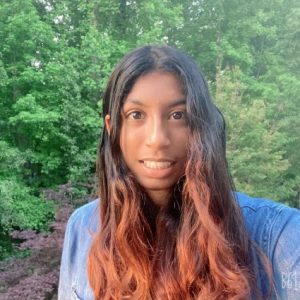
Janet will be working as a 2008 Peace Fellow with the Women in Black Network from Serbia. She will be contributing to their mission of nonviolent resistance to militarism, war, sexism and nationalism through ICT support and outreach. The Women in Black Network from Serbia promotes respect across cultures, ethnicities, religions, sexual orientations and ideologies, and instigates the active participation of women in the peace process.

Janet’s love of Slavic and Balkan culture was sparked by a summer school Russian class she took in elementary school. Her work with Women in Black will combine several of her interests: the women’s peace movement, education and human rights advocacy in post-conflict zones, and post-communist transitions.

A Master's student at Georgetown University concentrating in international development, Janet’s work and studies have thus far focused on forced migration and refugee resettlement. She did her undergraduate degree in international relations and French at Mount Holyoke College and spent a month studying at the Central Institute for Higher Tibetan studies in Sarnath, India. After living and working for a year in Edmonton, Canada, Janet returned to her hometown of Tucson, AZ to work as Community Outreach Coordinator at the International Rescue Committee. During her time there she had the opportunity to work with refugees from Bosnia, Russia, Somalia, Sudan, Liberia, and Iraq.

She is looking forward to working with and learning from the Women in Black, and is especially inspired by their commitment to peace, even in a climate of growing Serbian nationalism and isolationism.

Blog List

XML Feeds

Other:

Login..


FIND A PARTNER

The Advocacy Project develops partnerships with advocates on the frontline and with nongovernmental organizations (NGOs). In so doing, we take our cue from partners and tailor any support to their needs.

StatCounter - Free Web Tracker and Counter